In a community in West Pulau Banyak (Pulau Banyak Barat), Indonesia, off the western coast of Sumatra in the Indian Ocean, I conducted a study of the fishing practices and informal rules-in-use of small-scale fishers. I published my findings in Applied Geography (2015).

Following two devastating tsunami events in 2005 and 2006, residents had to adapt to an increasingly unpredictable and challenging social-environmental context, as climate change, coral bleaching, ecotourism, international development aid, and large foreign fishing vessels complicated and informed the sustainability of their fishing livelihoods and life-ways.
Using ethnographic methods and a household survey conducted in 2011, my research explored how fishers perceived threats and changes to their marine environment, and if there was evidence of self-organization to manage their resources (a principle of common-pool management identified by Elinor Ostrom).
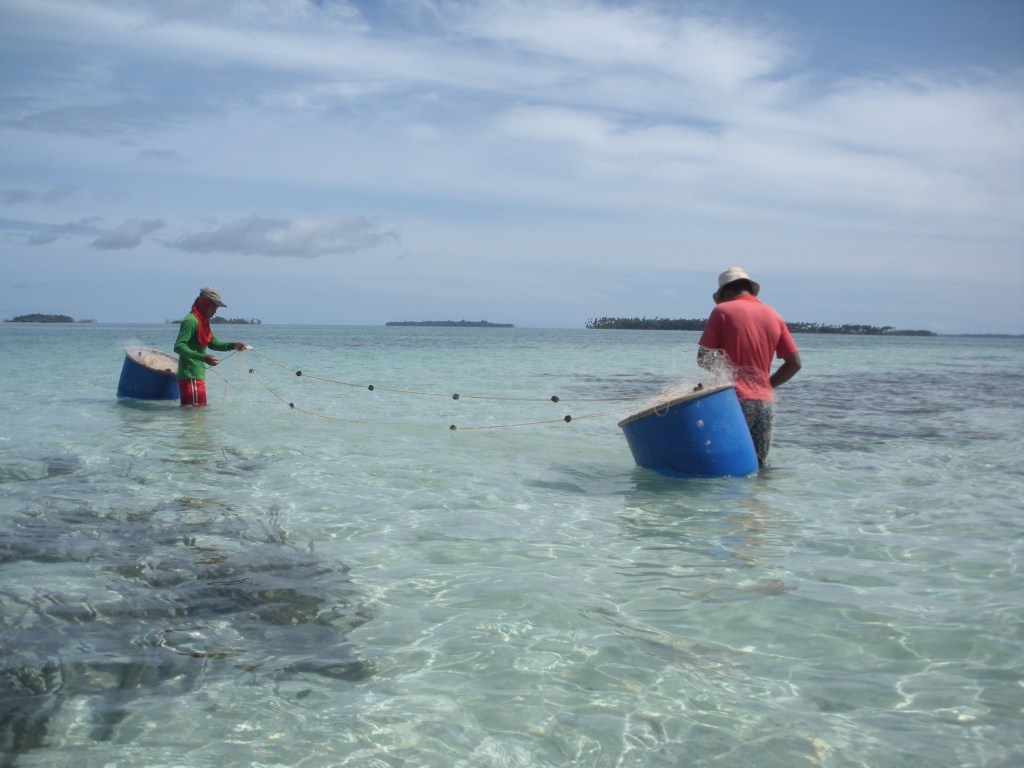
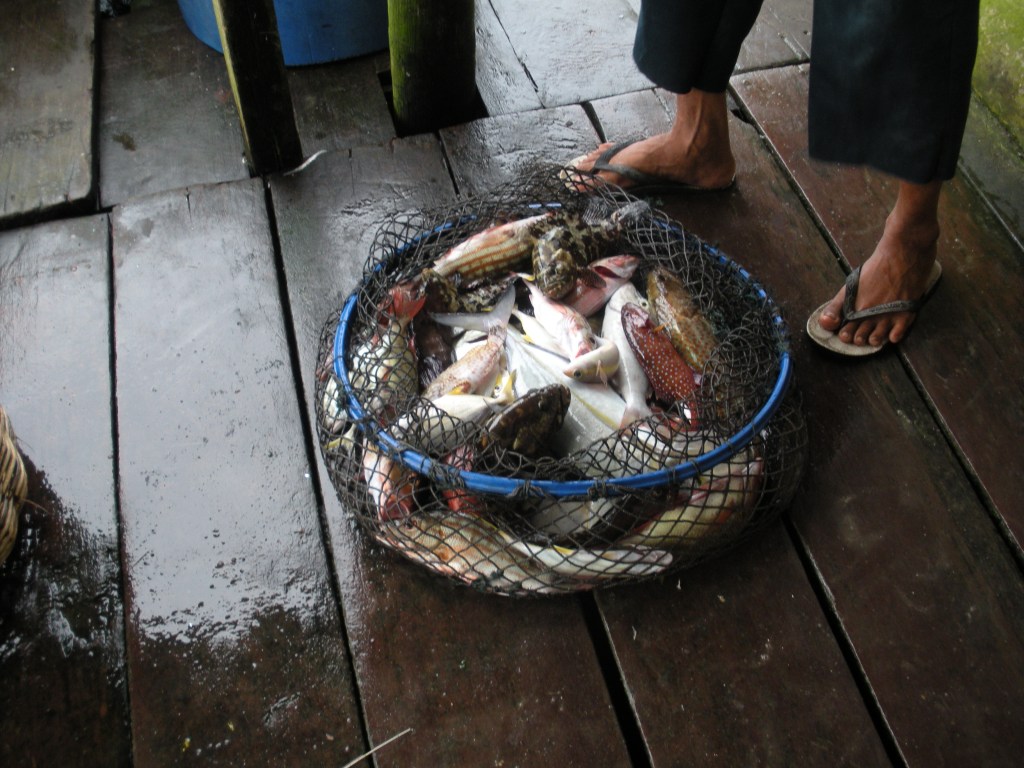
Fishing was the livelihood of 90% of households. Men were engaged in fishing the coral reefs and mangroves using small boats (perahu), primarily using home-made lures and spearfishing gear or nets. Some of their catch was eaten at home or shared with family, but the rest was sold both within the community and for export. Women collected mud clams from mangroves, an important source of protein for local diets as well as income.
Although the area was described as “unregulated”, with NGOs and regional authorities working to develop and implement fishing restrictions aimed at curbing overfishing, I observed fishers using “rules-in-use” and informal social norms that could work to reduce over-exploitation. These existing practices are important for informing more locally-relevant policies for regulating small-scale fisheries.
Saya berterima kasih kepada RISTEK & orang-orang hebat sekali di PBB!

