Growing up on the California coast, I often saw families fishing on piers, prepping their catch to take home– right below signs warning them of the dangers of eating their catch because of the toxins from urban run-off and other pollutants. So why do it?
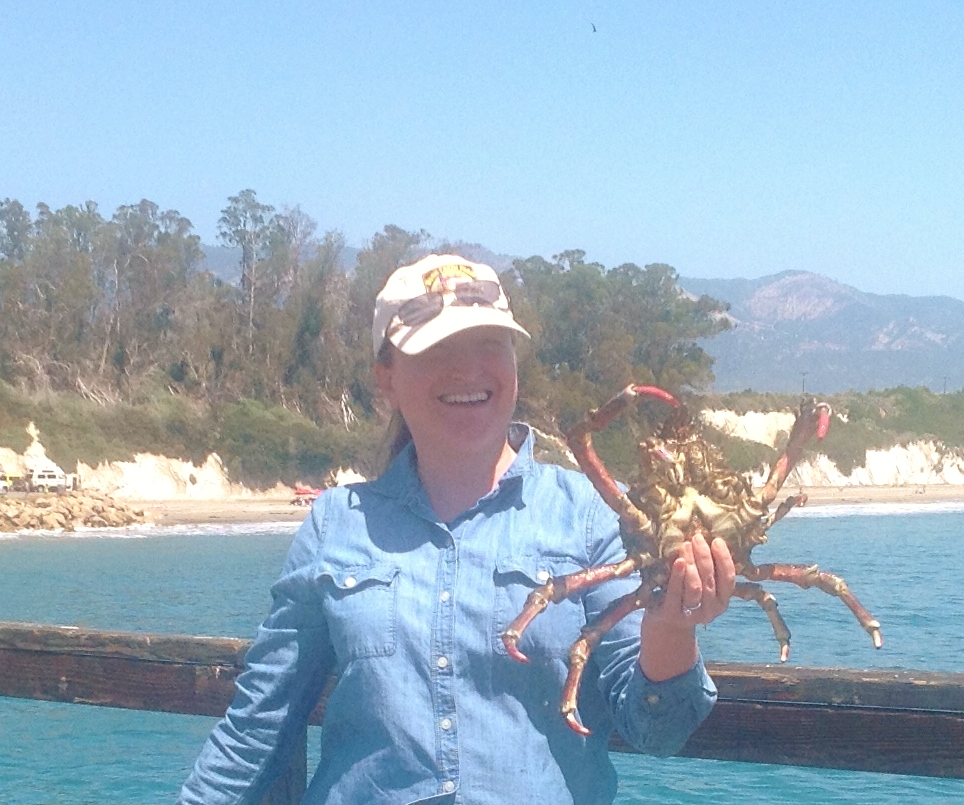
Fishing from piers along California’s coast has long been a free and popular activity. Unlike fishing from a shore or boat, no license is required to fish from a pier, making it attractive to socially and economically vulnerable urban residents, including low-income and BIPOC communities. That informality also makes it easy for policy makers to overlook or underestimate the social and environmental impacts of pier fishing.
With funding from the UCSB Chancellor’s Sustainability Grant and the UCSB Coastal Fund, I led a collaborative study of pier fishing in Santa Barbara County, California to survey fishers to understand their demographics, practices, and perceptions of environmental issues and risks.
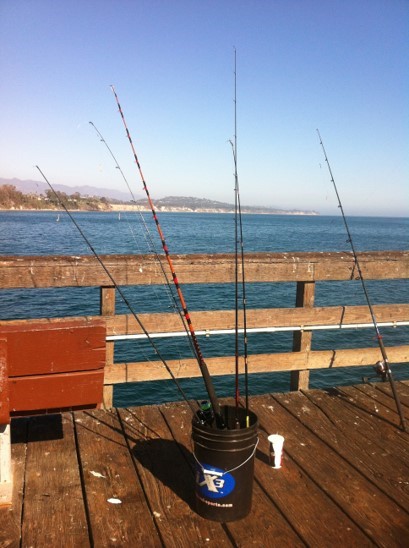
Our article in Marine Policy (2020) explores urban pier fishers’ motivations and how they use their catch, finding that many show characteristics commonly used to define subsistence- pier fishing gives them social, nutritional, cultural, and psychological benefits. Subsistence is usually only recognized in Native, Indigenous, and rural communities, but as others have argued, our research shows that city folk have important relationships with natural coastal environments too.
Overall, we found that pier fishing served as a form of subsistence for community members, especially Latinos, Asian/Pacific Islanders, and low-income households, who had high rates of fishing practice and catch consumption. We argue it’s important for policy makers to recognize that fishers are flexible, and can participate in “recreational”, commercial, and subsistence fishing simultaneously. Our results were published in an article entitled “Identifying, defining and exploring angling as urban subsistence: Pier fishing in Santa Barbara, California” in Marine Policy (2020).
 Barbara Quimby, PhD