BFCC LAB
The Blue Food & Coastal Communities (BFCC) Lab at Hawai’i Pacific University examines human relationships with marine environments, with emphasis on community-based management and co-governance, cultural value and connections, and placemaking in dynamic ocean spaces. We focus on three interconnected research areas:
“Blue Food” Security and Sovereignty
As demand grows for both wild-caught and
farmed seafoods, it is essential that we understand how ocean spaces and resources are woven into human societies and cultures.
Using a community-engaged approach, we collaborate with small-scale recreational and subsistence fishers in Hawai’i and the Pacific to bring attention to the non-market values and relationships that fishing communities derive through “blue foods”. Fishing and food-sharing are ways in which humans strengthen bonds, build social networks, and transmit knowledge and culture across generations. These benefits include food security and food sovereignty, as well as community resilience in the face of social and ecological stress.
Our lab examines the characteristics, motivations, and practices of non-commercial fishers, limu (seaweed) restoration groups, and their communities in the U.S. Pacific Islands. The aim of this research is to identify specific policy recommendations for improving the long-term sustainability of non-commercial fisheries that support equity and well-being for local and Indigenous communities.
Indigenous-led and community-engaged processes for marine and freshwater governance
Across Oceania, Indigenous groups and communities are leading the negotiation and transformation marine and coastal governance. In Hawai’i, local and Indigenous groups have navigated complex bureaucratic systems to
restore traditional Hawaiian fish ponds and create
community-based subsistence fishing areas (Winter et al 2023). These examples of Indigenous-led stewardship present an opportunity for reforming policies and institutions to support sustainability through the incorporation of indigenous and local knowledge and social networks.
In many settings, integrating Indigenous and state authority into co-management frameworks has proven to be beneficial for both social and ecological outcomes. However, there are many policy challenges in coastal and marine spaces, where customary practices and state law clash in their perspectives and goals for environmental management. Governance systems informed by colonial values and institutions can hinder local initiatives or co-management arrangements.
Our research contributes to the processes of decolonizing environmental policies and institutions to enable new Indigenous-led or hybridized governance that can operate in alignment with traditional and local values, knowledge, and needs. Through policy analysis and community collaborations, we will examine how recognition for traditional cultural practices in state
laws and regulations may support more resilient and sustainable coastal management. We are also developing research methodologies that reflect principles of reciprocity and collaboration to ensure that our work benefits our community partners.
Intergenerational Perceptions of Climate Change Adaptation in the Pacific
Climate change is a current and existential threat to Pacific Islander communities. Traditional ecological knowledge, heritage management, and strong intergenerational networks can support community resilience. Drawing on traditions and stories of past adaptations to environmental change and recovery from environmental shocks, Pacific Islanders are developing context-driven responses to climate change.
In collaboration with the Islands of Opportunity Alliance (IOA-LSAMP), UH Hilo, and the University of Guam, this project will collect Indigenous stories of climate change from throughout the Pacific that demonstrate culture and place-specific experiences and solutions to climate change. This project has two key goals: 1) contribute to our understanding of how culture can support social-ecological resilience; and 2) provide research opportunities that support the development and success of Pacific Island students who will become leaders of climate change science and solutions.
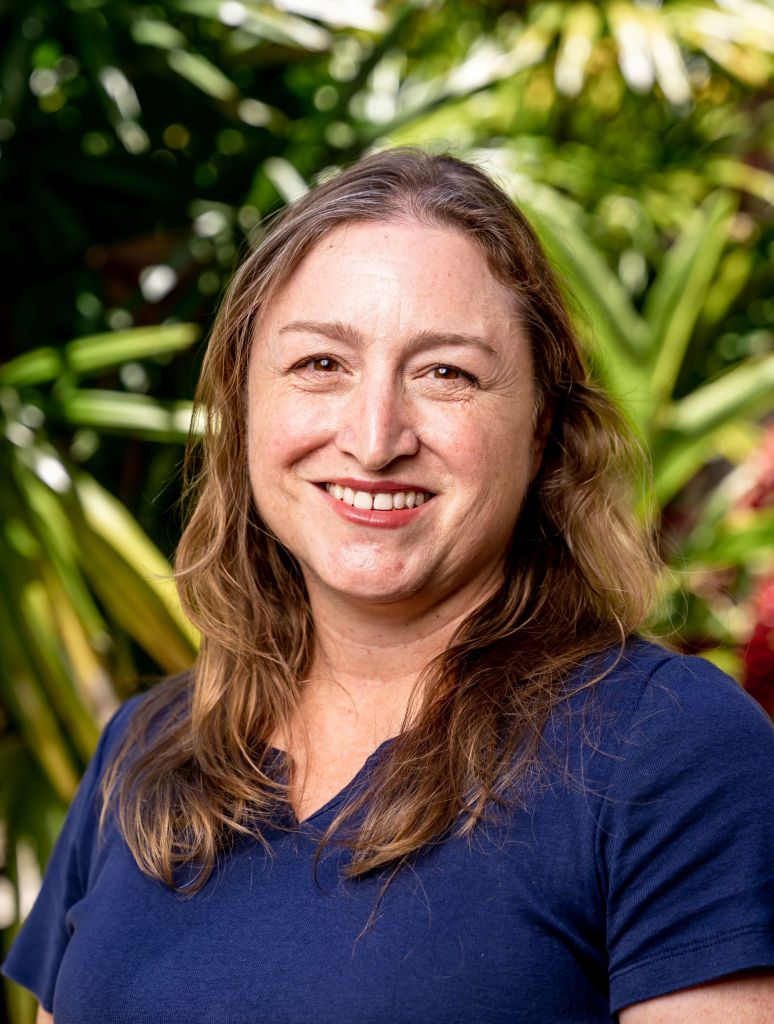
Dr. Quimby leads the BFCC Lab.
Current Lab Members
Olivia Siudak (MSMS)
Ryan Olaynack
Asinah Cecil
Ziomara Ramos
Amelia Belbin
Alumni
Katlin Davenport (’24, MSMS)
Lauren Goodteacher (’24, Marine Affairs BA)
Kala McDonald (’24 Marine Biology BA, Honors)
Research Opportunities
We are looking for HPU student research assistants and interns to conduct social and environmental research!
Current Projects:
Fish Pond Restoration & Social Resilience
Northwest Hawaiian Islands National Sanctuary
 Barbara Quimby, PhD